BLOG
From Funnels to Loops: A 4-Step Operational Framework for Customer Journey Mapping
In today’s fast-paced, AI-driven marketing landscape, businesses often find themselves drowning in automation tools but still struggling to deliver seamless customer experiences. Disconnected touchpoints, inconsistent data, and unclear handoffs leave potential customers frustrated and growth opportunities on the table.
At Social Garden, we have seen firsthand how a clear, operational approach can transform this chaos into a coordinated, scalable journey. Our proven four-step framework moves organizations beyond linear funnels, creating visibility, alignment, and automation across every stage of the customer lifecycle. The result is smarter processes, happier customers, and measurable growth that not only supports your business but drives it.
1. Standardising Lead Capture: The Quality Foundation
A “smart” CRM is only as good as the data entering it. The first step is to align on a lead capture framework that ensures clean data entry and minimal manual handling. By standardising how we collect information across web forms, social media, and offline events, we create a baseline for personalization.
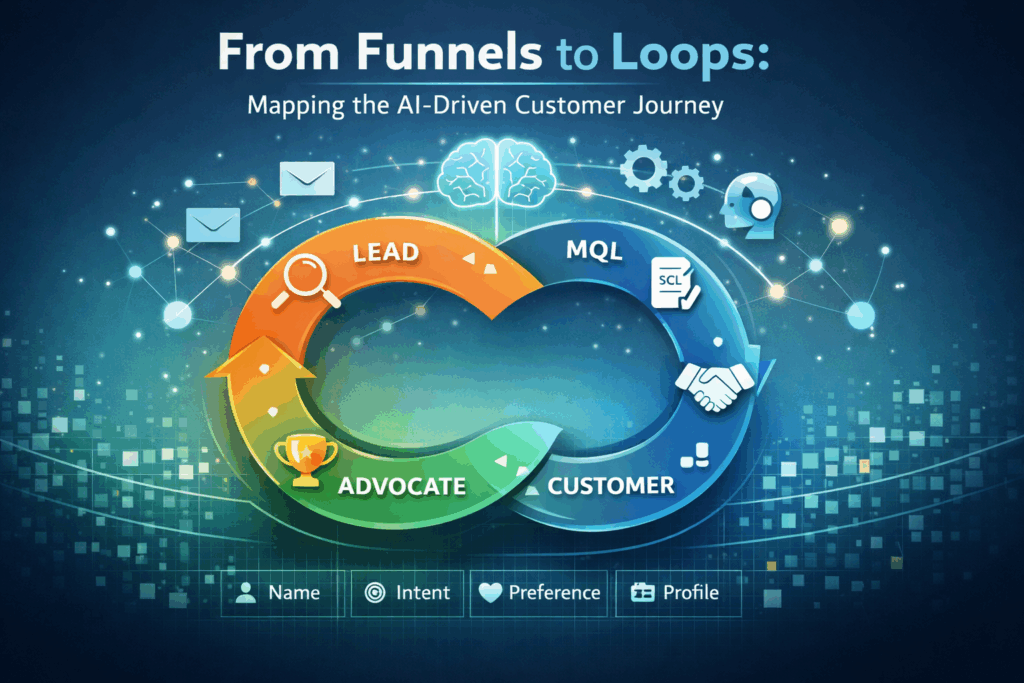
According to the sources, best-practice data should be categorized into four specific buckets:
- Mandatory: Baseline details like name and contact info.
- Intent: Data that signals readiness to buy, such as budget or market timeline.
- Profile: Information that supports a smooth sales handover.
2. Standardising Lead Qualification: The “Blended” Advantage
While 100% data-driven lead scoring offers efficiency, the sources suggest that a blended approach is ideal. This model uses automated lead scoring to do the “heavy lifting” by identifying intent signals, while human input via sales calls clarifies nuances that data might miss.
By defining clear Lead Stages (Prospect, MQL, SQL, Opportunity, Customer), teams gain a transparent view of where a lead stands in their journey. This prevents high-intent prospects from falling through the cracks and ensures they go through the right process based on their actual intent.
3. Mapping the Funnel: Creating Shared Visibility
The goal of this phase is to move away from departmental silos and create shared visibility across marketing, sales, and customer care. This involves building a unified funnel that maps every lifecycle stage from initial enquiry to post-sale settlement.
To keep this process simple and actionable, organizations should:
- Define clear entry and exit criteria for every stage to prevent deals from getting stuck.
- Identify handover points between teams to reduce friction.
- Ensure consistent data tracking at every milestone to improve sales forecasting.
4. Automation Across the Funnel: Scaling Excellence
With a map in place, you can identify automation opportunities that reduce manual effort and improve conversion efficiency. This isn’t just about top-of-funnel emails; it’s about the entire lifecycle:
- Lead Management: Automating multi-channel capture and round-robin assignment.
- Nurture Programs: Using automated sequences for education, trust-building, and re-engaging “cold” leads.
- Late-Stage Sales: Triggering internal tasks for contract generation and automated reminders for final payments.
- Post-Sales: Automating NPS surveys and loyalty invitations to turn customers into advocates.

Wrapping It Up
Customer Journey Mapping is the blueprint that makes your marketing automation and AI strategy actionable. The results are measurable: improved user experiences, reduced processing times, and higher conversion rates.
Social Garden is already helping organizations navigate these transformations. Our recognition with the 2024 Platform Migration Excellence Award underscores our commitment to helping businesses build “smart” systems that don’t just support growth, but enable it.
Think of Customer Journey Mapping as the architectural blueprint for a complex building. Before construction begins, every room, corridor, entry point, and handover must be clearly defined to ensure the structure functions as intended.
In the same way, customer journey mapping provides organizations with a clear framework for how customers move through the business—defining stages, responsibilities, decision points, and system requirements. This clarity enables teams to design their CRM, automation, and reporting structures with purpose, rather than retrofitting tools after the fact.
This approach is reflected in our engagement with Ingenia Lifestyle Communities, where establishing a shared journey model created the foundation for more consistent processes, cleaner data, and scalable system setup.
👉 Ready to map your future-state customer experience? Talk to us today.
contributors